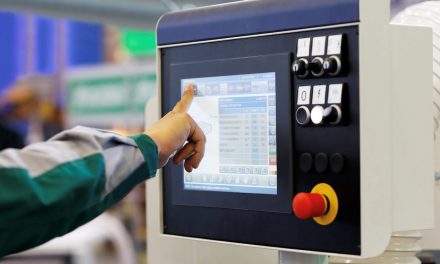
A new IC has been unveiled by Microchip that revolutionises intuitive, gesture-based, non-contact user interfaces. This advance comes in the form of the company’s new MGC3130 IC and is an electrical-field (E-field)-based, configurable 3D gesture controller.
Interesting points of note for end applications are that, the device offers low-power, precise, fast and robust hand position tracking with free-space gesture recognition.
The IC is said to have power consumption as low as 150 microwatt s in its active sensing state, as a result this enables always-on 3D gesture recognition, even for battery-powered products where power budgets are extremely tight.
A low-power design along with a variety of configurable power modes are said to be the enablers for what is described by the company as one of the lowest power consumptions of any 3D sensing technology, with up to 90 percent lower than camera-based gesture systems.
The IC is capable of achieving exceptionally high gesture-recognition rates required by today’s consumer products through an on-chip library; called the Colibri Suite, of intuitive and natural human gestures.
This suite offers a combination of the stochastic Hidden Markov model and x/y/z hand position vectors to provide designers with a reliable set of recognised 3D hand and finger gestures that can be easily employed in their products.
Examples include Wake-Up on Approach, Position Tracking, Flick Gestures, Circle Gestures and Symbol Gestures to perform functions such as on/off, open application, point, click, zoom, scroll, free-space mouse-over and many others.
Designers can use this system to match system commands to gestures. Additionally, the chip enables use of pre-filtered electrode signals for additional functionality in applications.
This IC utilises thin sensing electrodes made of any conductive material, such as Printed Circuit Board (PCB) traces or a touch sensor’s Indium Tin Oxide (ITO) coating, to enable invisible integration behind the device’s housing. This allows for visually appealing industrial designs at very low total system costs.
The technology is said to provide 100 percent surface coverage, which subsequently eliminates ‘angle of view’ blind spots perhaps found in other technologies.
A detection range of up to 15cm enables the IC to fit well within products designed for close proximity and direct user-to-device interaction. A range of configurable, smart features enables the next breakthrough in human-machine-interface design across various industries.
Example applications include devices such as keyboards that utilise advanced interface capabilities in the new Windows 8 operating system, such as using hovering motions and free-space gesture controls, instead of reaching over to touch a screen.
Microchip