“We overestimate technology in the short term and underestimate it in the long term,” wrote Arthur C. Clarke. For much of today’s technology, this is true, but for IoT systems, it’s the opposite. Engineers overestimate long-term performance, assuming that once deployed, an IoT device will continue running reliably for decades. This isn’t the case. Here, Ross Turnbull, director of business development at application-specific integrated circuit (ASIC) specialist Swindon Silicon Systems, explores how custom ICs help OEMs build resilient, long-life IoT systems.
In its 2025 Mobility Report, Swedish telecommunications company Ericsson predicted that by 2027, “IoT connections would reach over 30 billion”. These connections reflect billions of physical devices deployed across industrial machinery, smart buildings, transportation, medical equipment and consumer environments.
Despite the variety of applications, most IoT devices share a similar architecture. Each device is composed of functional modules: sensors that detect environmental or operational conditions, controllers that process that information and make decisions and communication units that transmit data between modules or to central networks. Together, these modules allow devices to interact with the physical world and form part of a larger, connected ecosystem.
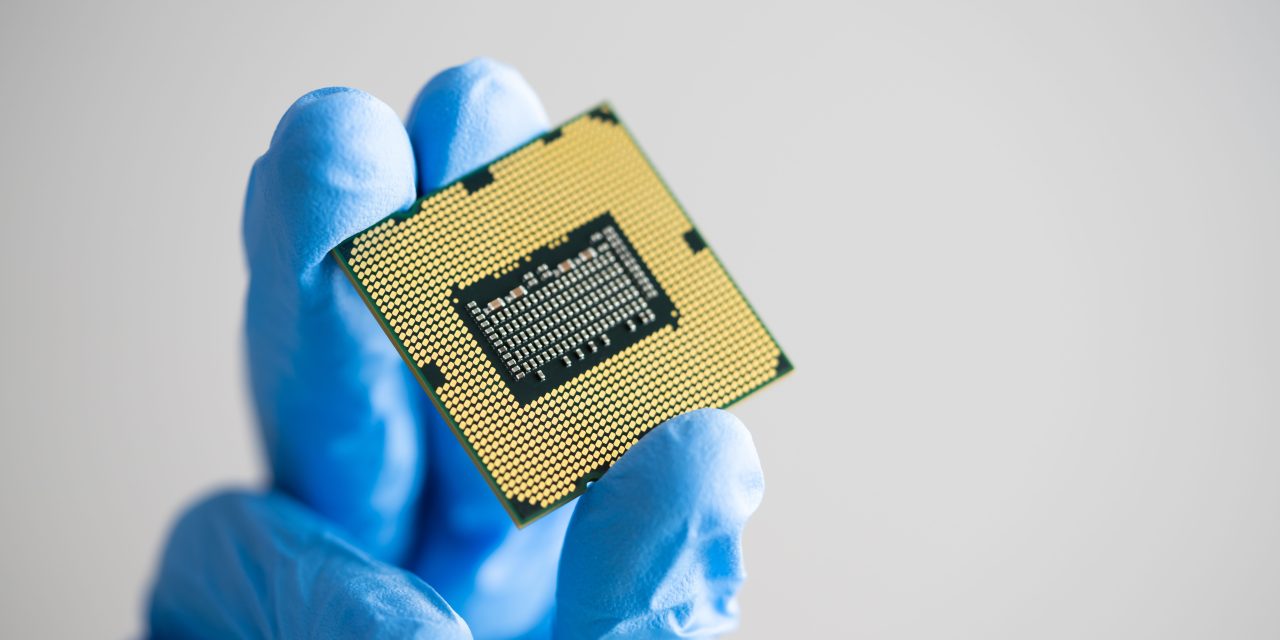
Powering each module are electronic components, among which semiconductors form the circuits that carry out the module’s core functions. These chips process analogue and digital signals, execute control algorithms, manage power delivery and coordinate communication between module elements. In essence, they act as the “brains” of the module, performing calculations, logical operations and signal routing that enable the device to sense, decide and act.
Their electrical behaviour, including signal timing, voltage tolerance, power efficiency and thermal stability, directly affects the device’s ability to process data accurately, communicate reliably and operate continuously without failure throughout its intended lifespan.
The lifecycle challenge
While the functionality of IoT devices varies widely, many are deployed with the expectation that they will operate for long periods of time in harsh conditions with minimal maintenance. According to Verizon Business, IoT sensors alone are expected to last “at least 10 to 20 years”. Similar lifespans are common in energy metres, smart locks, wearable monitors and connected diagnostic devices.
Standard semiconductors are inherently capable of operating for 20 to 30 years under normal operating conditions. However, the continuous stresses of IoT systems can significantly shorten their effective lifespan.
In IoT systems, semiconductors are often exposed to continuous thermal cycling, sustained high or low temperatures, voltage fluctuations, mechanical vibration, humidity and electrostatic discharge. These stresses can induce degradation mechanisms within the chip, such as electromigration, hot-carrier injection, dielectric breakdown and timing drift. Over years of operation, these stresses can lead to signal instability, processing error and increased power consumption.
IoT devices are also made up of multiple modules, each with dozens or hundreds of interconnected components. A single semiconductor degrading or failing can disrupt sensor readings, control algorithms or communications, potentially affecting the entire system.
Ensuring consistent operation for over a decade or more therefore requires components engineered for both robust electrical performance and environmental resilience, not just general-purpose use.
 Custom solutions
Unlike general-purpose, off-the-shelf chips, ASICs are designed specifically for the device, its operating environment and its expected duty cycle. Due to their tailored design, ASICs can mitigate degradation mechanisms that commonly affect standard semiconductors over extended operation.
For example, by tailoring the chip’s layout and fabrication process to the device and its expected operating profile, engineers can minimise long-term degradation. This is because specifically planned interconnects, transistor placement and material choices help distribute current, manage heat and reduce stress concentrations, preventing gradual wear that can compromise performance over time.
On-chip functional blocks, such as voltage regulators, power-gating circuits and signal buffers, can also be integrated onto an ASIC. This helps maintain stable power delivery, reduce leakage and preserve signal integrity, ensuring the device continues to process data accurately and communicate reliably over decades of operation.
Furthermore, integrating multiple functions into a single chip reduces the number of discrete components, lowers the risk of failure and simplifies module design. This combination of integration and tailored functionality not only enhances reliability but can also improve power efficiency, a critical factor for battery-powered or energy-constrained IoT devices.
Finally, ASICs help OEMs secure long-term component availability. As each chip is purpose-built, its supply can be planned to match the full expected device lifecycle, ensuring critical components remain available throughout the device’s expected 10 to 20-year lifespan.
This reduces the risk of mid-life obsolescence, which can otherwise require costly redesigns, requalification or alternative sourcing. Such predictability is particularly valuable for IoT devices deployed in remote or hard-to-service locations, where maintenance or replacement is logistically challenging or expensive.
Clarke’s observation reminds us that technology’s true test is longevity. In IoT, where engineers often overestimate long-term performance, ASICs provide purpose-built reliability, stable electrical behaviour and planned supply continuity, enabling devices to withstand decades of operation and deliver consistent, high-performance operation across the full lifecycle of even the most demanding IoT applications.
Swindon Silicon Systems specialises in the supply and design of ASICs for IoT devices across industry, automotive and aerospace. If you have a project, contact us today.
For electronics updates please visit: https://efemag.co.uk/category/news