 The relentless miniaturization trend in electronics presents a constant challenge: cramming ever-more functionality into ever-shrinking devices. Traditional Printed Circuit Boards (PCBs) are reaching their physical limitations, forcing engineers to seek innovative solutions. The 3D-Circuits technology, which integrates electrical circuits with three-dimensional mechanical parts, offers a promising answer. However, designing these complex structures presented a significant hurdle – a lack of user-friendly design tools.
HARTING, a global leader in connector and interconnect technology with a pioneering spirit in 3D-MID, recognized this challenge. To unlock the full potential of 3D-Circuits, they partnered with Altium, a world-renowned provider of advanced PCB design software. This powerful collaboration resulted in two  groundbreaking solutions: Altium Designer’s new 3D-MID design tool and the new HARTING standard product, the PCB Expander.
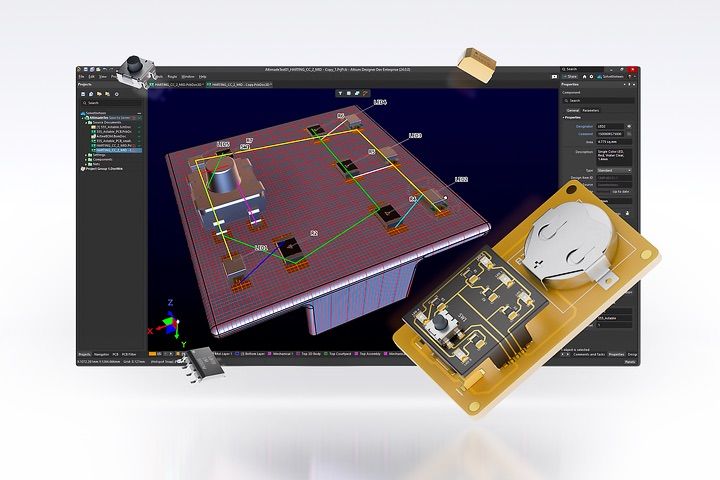
Revolutionizing the Workflow: Seamless 3D-MID Design with Altium Designer
Prior to this collaboration, 3D-Circuits design was a complex and time-consuming process. Engineers often needed specialized software and expertise, hindering widespread adoption of the technology. Altium Designer’s innovative 3D-MID design tool shatters these barriers.
“The collaboration with Altium has been instrumental in making 3D-Circuits design more accessible and efficient than ever before, “says Thomas Hess, Head of PM, Product & Technology Development at HARTING. “This tool empowers engineers to leverage their existing knowledge and workflows, reduces the time for the design and most important, compared to manual layout, it includes electrical design rules and schematic connectivity.
Here’s how Altium Designer streamlines the 3D-Circuits design process:
- Leveraging Existing Assets: Engineers can utilize their standard library components and
established schematic designs, eliminating the need to create new components specifically for 3DMID
applications. This saves significant time and effort. - Intuitive 3D Design Environment: The software provides a user-friendly interface for placing and
positioning components directly on the surface of a 3D substrate. This eliminates the need for
complex 3D modeling expertise. - Seamless Connectivity Routing: Connections are routed based on the established schematic logic,
ensuring design consistency and reducing errors. - One-Click Manufacturing Ready: Once the design is complete, a single click generates all the
production files required for manufacturing, streamlining the transition from design to production.
Maximizing Space with the HARTING PCB Expander
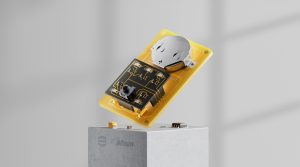 The HARTING PCB Expander further enhances the space-saving capabilities of the 3D-Circuits technology. This innovative product acts as an extension of the main PCB, eliminating the need for bulky subassemblies and intricate layouts that can eat up valuable real estate.
“The PCB Expander is a game-changer for engineers working in space-constrained environments,” says Michael Mross, Project & Sales Manager at HARTING. “It allows them to pack more functionality into smaller devices without sacrificing performance.”