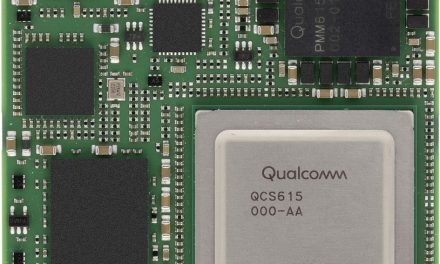

To mark World IoT Day on 9 April, embedded electronics consultancy ByteSnap Design has released guidance for industrial IoT manufacturers facing the complex task of migrating long-lifecycle connected devices away from legacy cellular networks.
Following the shutdown of UK 3G networks in 2025, manufacturers are under growing pressure to update products built around legacy connectivity. Although 2G is expected to remain until at least 2033, operators are already reducing capacity as spectrum is reassigned.
In response to these challenges, ByteSnap Design has introduced its Cellular Migration Fast-Track service, helping manufacturers transition connected products from legacy 2G and 3G technologies to modern standards such as LTE-M, Cat-1Bis and 4G. Drawing on this experience, ByteSnap’s engineers highlight several technical factors manufacturers should consider when planning an upgrade.
- Address certification requirements at the start of the project
Many upgrade projects stall when engineering teams encounter what specialists describe as a “certification wall”, where RF design challenges and regulatory testing delays push development timelines far beyond initial expectations. Cellular devices must pass certification programmes such as PTCRB or GCF before connecting to public networks, and failures can add months to development cycles. Each failed test cycle can cost tens of thousands of pounds, so considering certification requirements early can help prevent costly redesigns. - Select a cellular standard with long-term support
Manufacturers must decide between technologies such as LTE Cat-1, LTE-M (Cat-M1), NB-IoT and emerging 5G options designed for IoT applications. The choice depends on factors including power consumption, geographic coverage, data requirements and long-term network availability. LTE Cat-1Bis is gaining traction in industrial applications because it offers global coverage and relatively straightforward hardware integration. - Review RF design and antenna matching
Updating cellular modules often requires changes to antenna design, impedance matching and RF tuning. Small variations in PCB layout, enclosure materials or antenna placement can significantly affect signal strength and certification results. Antenna performance issues are a common cause of certification failures in cellular upgrade projects. - Reassess power supply and modem integration
The latest cellular modules can have different electrical characteristics compared with legacy devices. Transmission bursts can create short current peaks that require careful power supply design and decoupling. Firmware may also need updating to support new modem interfaces, AT command structures and network management behaviour. - Plan for long-lifecycle industrial deployments
Industrial IoT systems such as EV charge points, asset trackers, medical equipment and remote monitoring devices are often deployed for ten years or more. Updating these platforms for the newest cellular technologies frequently requires broader hardware updates rather than simply replacing a modem. - Factor in emerging security and compliance requirements
Connectivity upgrades increasingly coincide with new security obligations. Regulations such as the UK’s Product Security and Telecommunications Infrastructure (PSTI) Act and the EU’s Cyber Resilience Act introduce requirements around vulnerability management, secure software updates and device authentication. - Identify specialist capability gaps early
Upgrading legacy connected products can require expertise in RF design, modem integration and certification processes that general embedded engineering teams may not maintain in-house. This can include areas such as antenna matching, AT command integration and embedded Linux modem drivers. Identifying these capability gaps early can help prevent projects from extending far beyond their original timelines.
ByteSnap Design’s Cellular Migration Fast-Track service helps manufacturers transition legacy devices to modern cellular standards through RF hardware design, antenna optimisation, firmware integration and certification management. Drawing on experience from more than 50 cellular upgrade projects and established certification lab relationships, the service moves teams from stalled prototypes to certified, production-ready hardware faster. ByteSnap Design has delivered more than 900 engineering projects across industrial, medical, and IoT sectors over the past 18 years.
Dunstan Power, director at ByteSnap Design, concludes: “The sunsetting of 2G and 3G networks has created a genuine minefield for companies developing embedded products. It’s no longer just about hardware; manufacturers are facing a complex choice between multiple migration paths while simultaneously navigating new compliance headaches like the Cyber Resilience Act (CRA).
“The new Cellular Migration Fast-Track service helps to streamline and accelerate the cellular migration pathway. By plugging our specialist connectivity capability into an existing team, we can resolve the technical uncertainties that cause projects to drift, helping manufacturers move from a stalled prototype to a production-ready launch in a matter of months. We offer end-to-end engineering support from firmware development, PCB design right through to production.”
More information about ByteSnap Design’s Cellular Migration Fast-Track service can be found at: https://www.bytesnap.com/design-solutions/cellular-migration-fast-track/
For more electronics updates please visit: https://efemag.co.uk/category/news