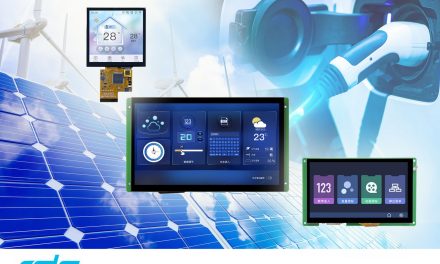
 David Harding, Product Manager at BVM explores the virtues of a fully featured touchscreen PC in your car dashboard and how this is shaping the driver experience
Computers have now become commonplace. In-vehicle entertainment is a classic example: in the dim and distant past, an analogue car radio was an optional extra. The basic AM radio was followed by eight track stereos, cassette radios, FM radio CD players, DAB radio and CD players. Now, computer-based infotainment consoles in executive vehicles offer radio, TV, DVD players, GPS, reversing cameras and more. For example, dash cam video recording is becoming increasingly popular: with the rise of staged accidents, a video record is available to negate fraudulent claims for rear end shunt accidents.
To provide all services in a single unit in a vehicle, a fully featured PC with 3.5G, Wi-Fi, Bluetooth and GPS capability embedded has to be installed. By combining wire-free Internet access with powerful computing capability, existing and emerging needs can be satisfied through a single integrated unit fitted in the dashboard.
At first sight it is a relatively simple task to embed a PC in a vehicle, but the electrical and environmental operating environments do present challenges.
A simple computer powered by a 12-volt input PSU will appear to work well but how is it switched on and off? Without cranking delay, ignition control and switch off timers there is a very real likelihood of a flat battery.
No one will remember to power down the PC before turning off the vehicle with the ignition key, so to avoid closing an operating application prematurely, the unit would need some form of UPS to initiate a shutdown when the ignition is switched off and the power input removed.
Similarly, the unit would be required to boot automatically when the power is restored. The notional voltage of a car system is 12 volts but when the alternator is charging the battery this is 13.8 volts; worst still, fast rising high transient voltages will be present, albeit for short periods, so a PSU specifically designed for in-vehicle operation is essential for easy operation and long-term reliability.
The environment in which the computer must operate is also unforgiving. In summer sun the inside of a vehicle can reach 60 0C, while overnight in winter, temperatures can fall as low as -20 0C. Once the vehicle has been running for a little while, the temperature will be more temperate, but, whatever the ambient environment, the hardware will be expected to operate immediately and reliably.
Probably the least tolerant system component is the disc drive; even solid-state discs can be adversely affected by temperature extremes.
BVM’s OB100/200 family of mobile computers have been developed in the UK to address this emerging need. They are full industrial strength computers housed in a rugged small form factor metal enclosure and need only an external vehicle power source and ignition control. They integrate several different technologies, accept inputs from a range of sources, store and process the data and act as a communications hub.
Mated with a resistive or capacitive touch screen display and HMI software that features a menu screen with big, easy to locate buttons, the unit provides a clear unambiguous interface for safe operation, minimising distraction for the driver. The HMI also accepts voice commands and feedback control.
Internet is an essential feature. Wi-Fi is a good interface but connection areas are very restricted, so the more viable option for true mobile use is 3G. UK designed and manufactured, all versions of the family support multiple 3 and 3.5G WAN protocols: HSUPA, 3G offering up to 5.7Mbit/s; HSDPS 3.5G up to 14.4Mbit/s and UMTS 3.5G with a theoretical 45Mbit/s download bandwidth. Wi-Fi, conforming to the 802.11b/g/n specifications, offering 11, 54 and 600Mbit/s raw data rates and Bluetooth short-range connectivity are built in, as is embedded GPS capability. Wired Ethernet and wireless capability with both active and passive antennas support and embedded video and high definition audio are also standard.
The units act as a music and video server, either accessing radio services via the internet or playing CDs or DVDs. The single unit replaces separate portable computers, phones, sat-navs, the car radio and DVD player, stores the images from a dash cam and interfaces with reversing cameras – and is also an industrial strength computer running whatever applications the user wishes to install.
An alternative, optimised for the professional fleet operator and driver, is the iKARPC which is an 8 inch touchscreen PanelPC running Windows XP Embedded.
The Fleet Management application, which, includes the back office server facilities, is ideal for both long haul and short drop fleet operators, enabling them to monitor up to 79 vehicle variables via a CAN bus interface with the vehicle management systems. It locates and tracks the vehicle, plans routes and manages job data.