Edge AI systems running fully offline are moving from proof-of-concept into deployable embedded products, with new demos showing natural language support interfaces operating directly on microcontroller hardware.
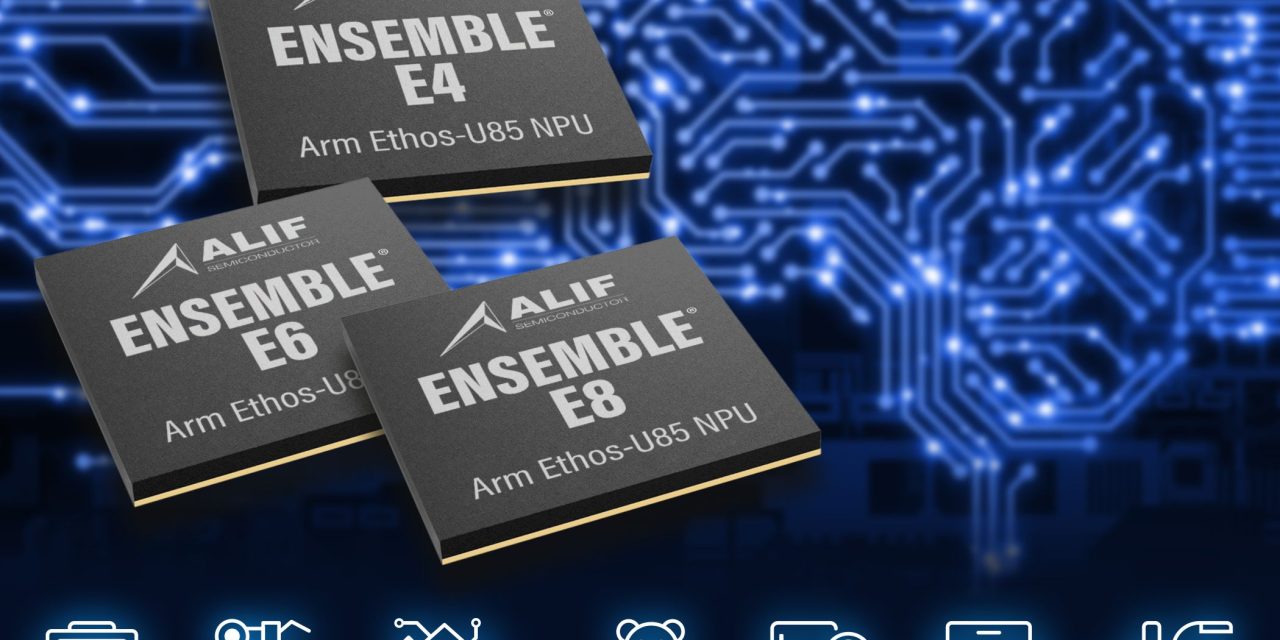
This new video, published by Alif Semiconductor – a distribution partner of Astute – showcases a washing machine that can explain what’s wrong and help fix it in real time. Built by Grovety and deployed on the Alif Semiconductor Ensemble E7 AI/ML AppKit and Ensemble E8 DevKit, this demo shows how Edge AI can transform appliances into interactive, intelligent support systems. It combines on-device Retrieval-Augmented Generation (RAG), local voice processing and live telemetry analysis without cloud connectivity or external inference services.
One example of the system’s capabilities provided in the video shows the user asking a washing machine “Why are you shaking?” and receiving a context-aware diagnostic response grounded in the appliance’s service documentation and live operating data. The system can also transition from conversational support into predefined command execution through voice prompts. According to Alif, the platform is designed around “deterministic outputs for predictable behaviour” and “fully offline operation with no cloud dependency”.
On-device AI reduces latency and connectivity constraints
The approach addresses a growing constraint in embedded AI deployment: inference costs and latency tied to cloud-hosted large language models. Running RAG locally removes dependency on continuous network access while keeping device documentation and operational telemetry resident on the hardware itself.
Alif Semiconductor’s Ensemble series is intended to support AI inferencing “at ultra-low power”. The architecture is designed for battery-powered and continuously available systems where cloud dependency introduces operational and security overheads.
Deterministic voice interfaces gain traction in embedded systems
The demo also highlights a wider move toward deterministic AI behaviour in embedded deployments. Unlike cloud-based assistants trained for broad conversational flexibility, the local RAG implementation restricts responses to validated appliance documentation and predefined action sets.
For OEMs, the commercial implications extend beyond user experience. Local inferencing can reduce recurring cloud compute expenditure, remove subscription dependencies and simplify deployment into environments with intermittent connectivity. Appliance manufacturers are also under pressure to shorten service cycles and reduce support centre costs tied to routine troubleshooting requests.
Hardware availability and edge AI deployment outlook
Edge AI deployment has accelerated across industrial control, white goods and consumer electronics as embedded processing performance improves without corresponding increases in power consumption. The availability of AI-capable microcontrollers has also improved compared with GPU-constrained cloud AI infrastructure markets, where lead times and allocation pressures continue to affect deployment schedules.
Damian Semple, franchise marketing manager, Astute Group, commented: “The shift towards local AI processing is changing how embedded systems are specified and supported. Removing cloud dependency reduces operational costs and simplifies deployment planning, particularly where connectivity, latency or data handling requirements limit remote inference options.”
Astute Group and Alif Semiconductor will be showcasing embedded AI and Edge AI microcontroller technologies at the upcoming Hardware Pioneers Max 2026 expo. Engineers and procurement teams evaluating edge inference architectures can book meetings with Astute’s specialists ahead of the event.
Contact Astute today to schedule your meeting
For more electronics updates please visit: https://efemag.co.uk/category/news