
Industry 4.0, IIoT and digitalisation are not just revolutionising factories – they are also transforming the way that electronics are housed in today’s modern technical facilities.
Before Industry 4.0, diecast aluminium and stainless steel were the obvious materials for protecting industrial electronics. Their toughness and ingress protection made them the prime choice – but now plastic enclosures are finding ever greater favour on the factory floor.
True, there has always been a place for plastic enclosures in industry – especially glass-reinforced polyester (GRP) which offers excellent protection in environments with a high risk of chemical hazards. But the feeling was that aluminium and steel enclosures always ruled the roost.
However, now there is a noticeable change. Aluminium and steel enclosures remain important with specialist enclosure manufacturers continuing to unveil new models designed to offer ever-greater protection. But now these metal enclosures are sharing the honours with increasingly advanced thermoplastic housings.
It is now possible to mount your electronics in extremely tough plastic enclosures that offer an IK impact rating – but at a significantly lower price point. That in itself is quite a coup but the benefits of plastic enclosures don’t stop there.
There are now plastic enclosures that offer not just the durability but also the ingress protection and advanced technical features of diecast aluminium enclosures. And those features should not be underestimated; simple design details can play a crucial role in keeping your circuitry safe.
So, what should industrial electronics designers and specifiers look for? What separates the plastic enclosures aimed at offices from those that can survive the punishment of life in a factory?
It starts with the plastic. Acrylonitrile butadiene styrene (ABS) used to be the go-to thermoplastic polymer for enclosures because it is strong, cost-effective and easy to machine.
But in recent years, ABS has been superseded by UV-stable Acrylonitrile styrene acrylate (aka acrylic styrene acrylonitrile) which provides far greater protection against the damaging effect of the Sun’s rays.
Even more popular are blends which combine ASA with polycarbonate (PC) for added strength. Polycarbonate is used in the manufacture of riot shields, bulletproof glass and CDs so its robustness is undeniable. Blends such as ASA+PC-FR (UL 94 V-0) are also more flame retardant than ABS (UL 94 HB).
And yet ABS remains an important plastic. In a PC+ABS-FR (UL 94 V-0) blend, it can provide impact protection of IK 08 – making it more resilient than some stainless steel enclosures.
Material strength is only half the story though – ingress protection is crucial. Non-industrial plastic enclosures tend to offer little defence against dust and water. Some provide IP 54 or IP 65 protection but industrial electronic enclosures need something more: IP 66 (for temporary flooding, such as rough seas), IP 67 (for temporary immersion in shallow water) or IP 69K (for high-pressure, high-temperature spraydowns at close range).
Lid retaining straps and captive screws are very useful if enclosures are to be installed at height. It’s all too easy to drop a lid or screw if you’re struggling to install a unit in high winds or other inclement weather. And if regular inspections are needed, then it’s worth specifying an enclosure with integrated lid hinges.
The enclosures should also have a recessed lid to accommodate a membrane keypad or product label. There should be plenty of space on the sides for cable glands and other connectors. Look for side recesses if you need to afford those interfaces some extra protection. Inside, the enclosures should have fastening pillars for PCBs, mounting plates and DIN rails.
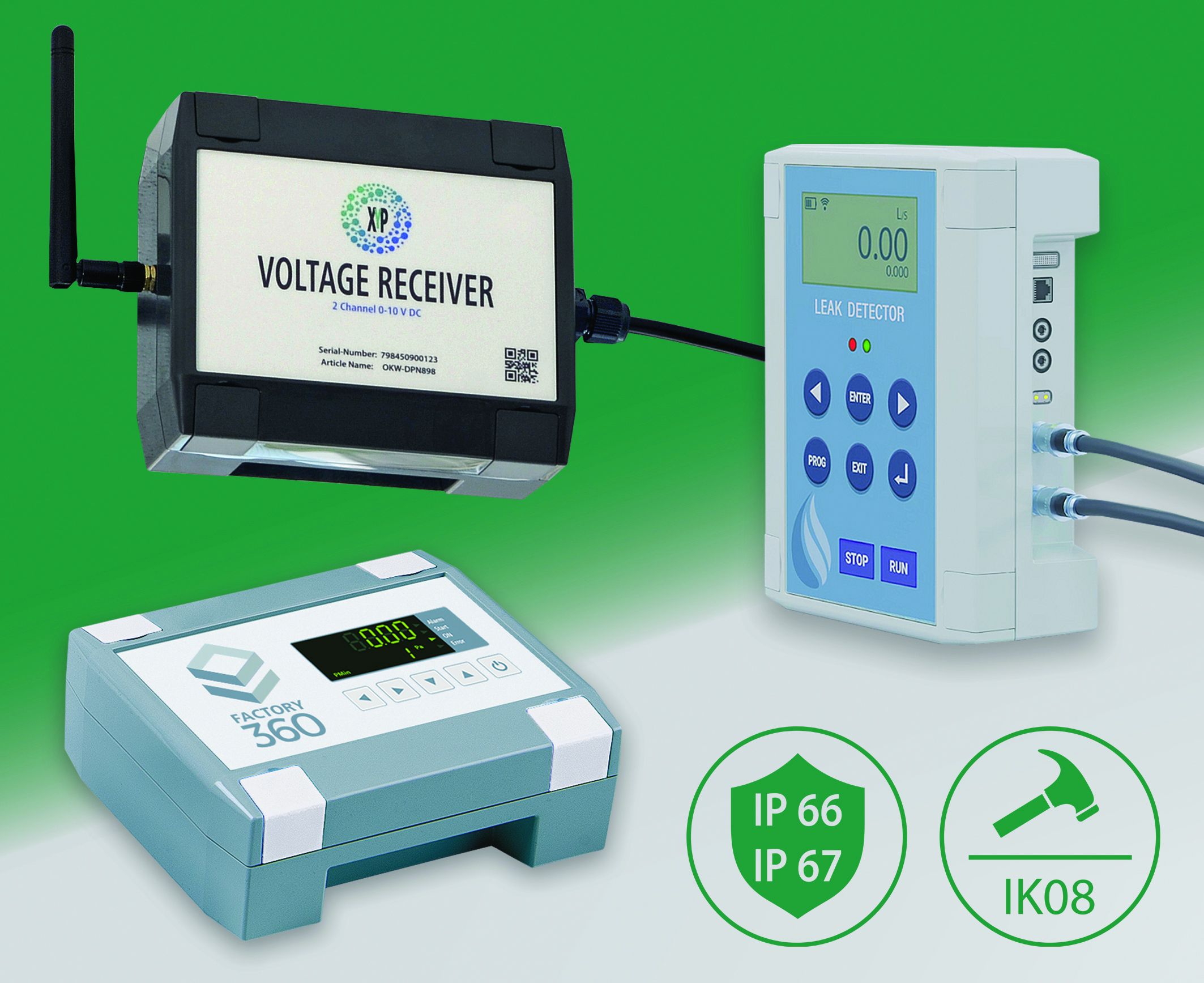
Electronic enclosures manufacturer OKW’s new SOLID-BOX (IP 66, IP 67) exemplifies the new breed of plastic housings for industrial electronics. It has been designed to suit a wide range of industrial applications.
SOLID-BOX is a stylish IK 08 desktop and wall-mount enclosure that lives up to its name, providing a very real alternative to stainless steel housings. ‘Lid closed’ installation is standard; all the screw channels are outside the sealed area. Corrosion-resistant and tamperproof captive Torx screws are concealed beneath snap-on trims. This further enhances the enclosure’s aesthetics – an increasingly important consideration in today’s 21st century smart factories.
Learn more about OKW’s SOLID-BOX enclosures here >>
Meanwhile, there’s another new type of plastic housing that’s making greater inroads into the industrial electronics market – sensor enclosures. IIoT’s insatiable demand for data means that factories now contain a myriad of sensors.
All these sensors must be housed quickly and easily in enclosures that are strong, fast to fit, and also attractive enough to match the futuristic look of heavily robotised and automated smart factories.
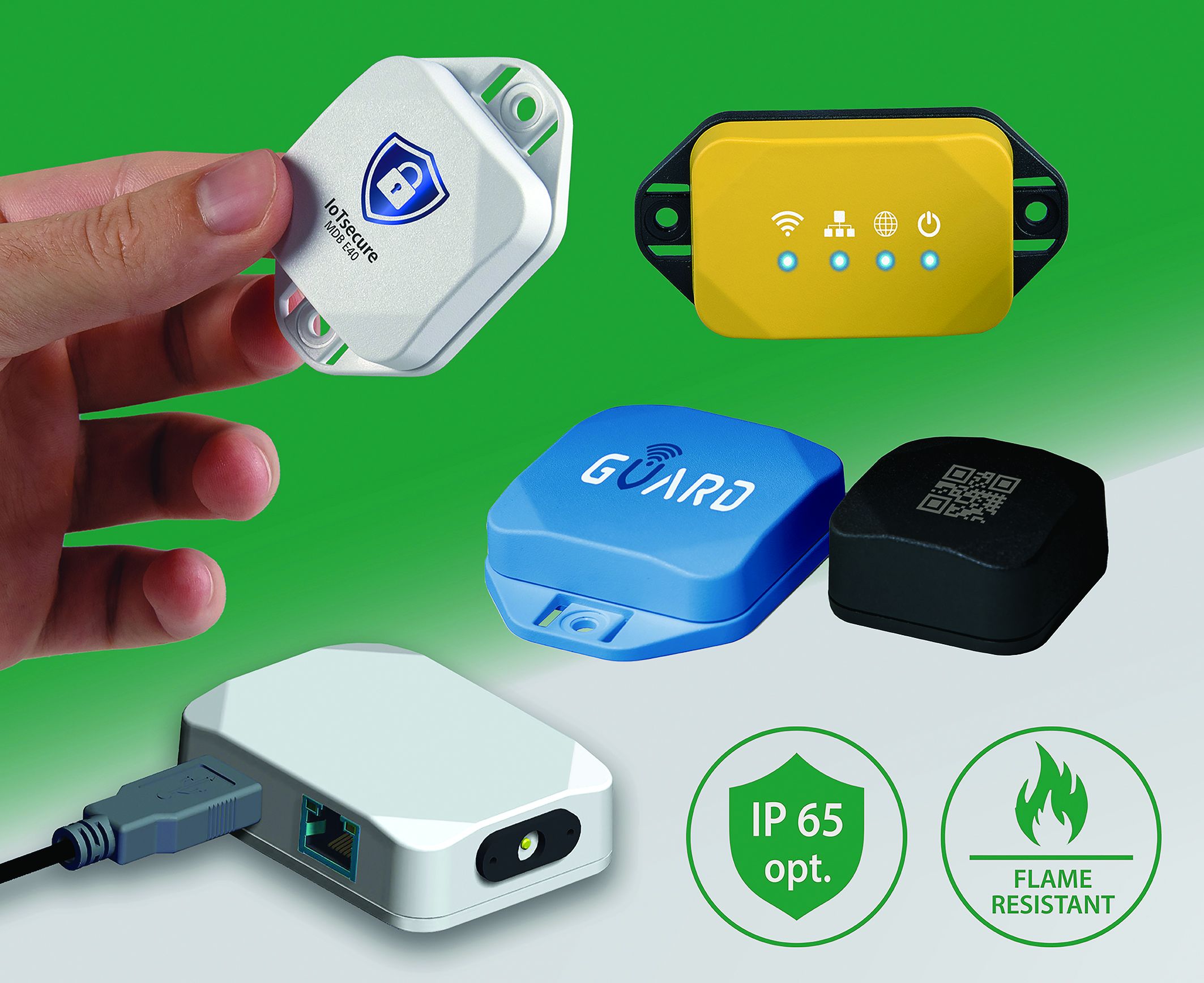
OKW’s MINI-DATA-BOX is designed for compact ‘go-anywhere’ industrial electronics
OKW’s MINI-DATA-BOX (IP 65) is a compact sensor enclosure that crams a lot of design benefits into its diminutive size. It is available with (or without) flanges that enable the enclosures to be either cabled-tied to rails and poles or screwed to flat surfaces. This popular feature also appears on OKW’s EASYTEC flanged enclosures (IP 65 optional).
Learn more about OKW’s MINI-DATA-BOX here >>
Specifying standard enclosures like these has always been faster and more cost-effective than opting for a fully bespoke housing. Enclosure manufacturers such as OKW can even supply the enclosures fully finished and ‘production line ready’.
For more information, view the OKW website: www.okw.co.uk
OKW ENCLOSURES LTD
Tel. (01489) 583858 | Email: sales@okw.co.uk