
Blueshift, will be presenting at this year’s National Space and Missile Materials Symposium (NSMMS) to spotlight its lightweight and thin thermal protection portfolio for defence applications.
Blueshift will exhibit at NSMMS 2026 where Garrett Poe, co-founder and CTO of Blueshift, will present “Breaking the Thermal Bridge: 19× Lower Conductivity and 44 °C Cooler Substrates with Polyimide Aerogel Tape in LEO.”
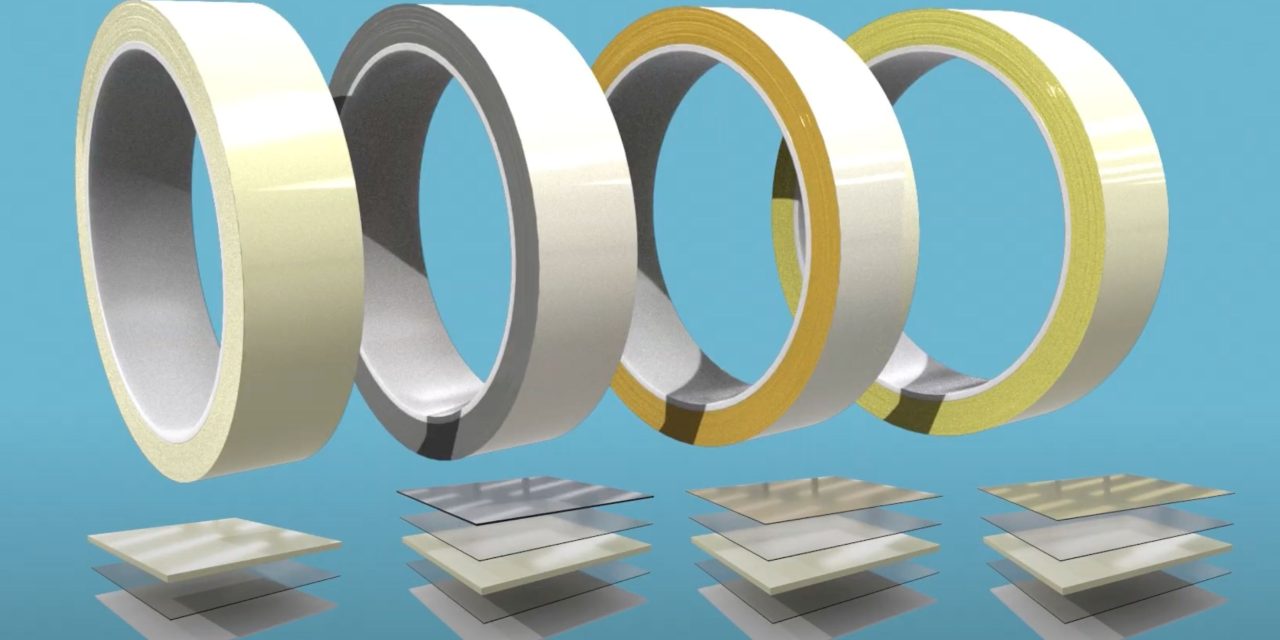
The presentation will outline Blueshift’s latest comparison of standard polyimide tape and AeroZero Tapes in a low Earth orbit vacuum environment and heat load, with results pointing to a clear improvement in thermal performance for spacecraft designers working to protect sensitive electronics in orbit.
AeroZero Tapes achieve thermal conductivity in vacuum of around 0.008 W/m·K compared with 0.152 W/m·K for standard PI tapes, while also delivering 85 per cent lower thermal diffusivity, according to findings to be presented at the show. Modelled results also highlight a 41°C reduction in orbital temperature swings and a 44°C reduction in peak temperature reached, helping to smooth the thermal profile for downstream components.
“NSMMS is an important opportunity for us to share how Blueshift is helping solve thermal management challenges in space and defence,” said Garrett Poe, Co-Founder and CTO of Blueshift. “We’re looking forward to showing how our technology can reduce heat transfer, ease thermal stress and support more reliable performance on Earth and beyond.”
The event will also give attendees a closer look at the wider AeroZero platform, which is fully flight-qualified and already operating across multiple aerospace applications. The company’s materials are currently supporting more than 10,000 square feet in spaceflight and orbit, with a further 5,000+ square feet prepared for orbital launch.
Blueshift’s NSMMS presentation will focus on how their 85 per cent air material technology can interrupt the heat path between structural layers, significantly slowing conductive heat transfer and improving passive thermal management in space.
For more electronics updates please visit: https://efemag.co.uk/category/news