 MikroElektronika (MIKROE) is committed to changing the embedded electronics industry through the use of industry standard hardware and software solutions. Last year, the company introduced Planet Debug™ which enables designers to develop and debug embedded systems remotely over the internet without investing in hardware.
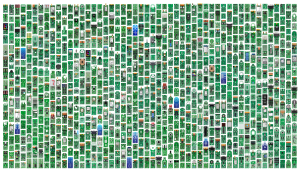
The journey which has led to Planet Debug contains a number of other ‘firsts’. In 2011, the company invented the mikroBUS™ development socket standard and the compact Click™ boards for peripherals that use the standard to dramatically cut development time. Now the company offers more than 1450 Click boards – ten times more than competitors – and the mikroBUS standard is included by many leading microcontroller companies on their development boards. SiBRAIN™ is MIKROE’s standard for MCU development add-on boards and sockets and the company’s DISCON™ standard enables uses to choose between a wide variety of supported LCDs and touchscreen options. MIKROE also offers NECTO™, the world’s most flexible IDE, as well as industry’s widest range of compilers, plus development boards, programmers and debuggers.
T he final element in the Planet Debug story is CODEGRIP, a universal programmer and debugger. Uniquely, CODEGRIP enables designers to program and debug their designs over Wi-Fi, as well as USB-C. No other company offers this.
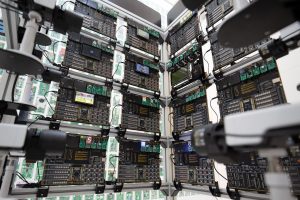
Planet Debug pulls all these complementary elements together as a hardware-as-a-service platform. For just $4/day, designers can reserve time on a remote Planet Debug station configured to their requirements, and develop and debug their own applications code remotely through the NECTO Studio IDE without having to source the hardware, wait for it to arrive and plug it all together.
By using Planet Debug, users save time as well as money. They also get to ‘try before buying’, and can change peripherals, displays or even the MCU without needing to buy any hardware, learn any new software, or write any new code. Planet Debug is great for students and professionals alike. In the education environment, resources can be shared and there is no configuration required to bring up a system. For the working designer, time is the most precious commodity, and Planet Debug makes it easy to get up and running very quickly, and to respond to changing needs from product marketing. Also, chip shortages will not affect development time.
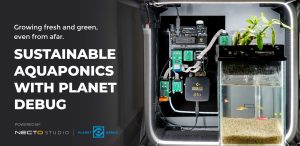
A case study serves to illustrate the revolutionary approach now available globally. Microside, a product development, manufacturing and training company based in Mexico and a partner of MIKROE, has developed a full aquaponics system using Planet Debug based on MIKROE’s Click boards.
The project aimed to demonstrate the practical application of the MIKROE toolchain at the IoT Day Guadalajara 2023 event. Initially, Microside’s goal was to monitor temperature and humidity using its X-TRAINER PRO development board, powered by MIKROE’s integrated development environment, NECTO™, and Click boards, then display this data on Click Cloud. However, the company soon realized that it would be possible to create a full aquaponics system, monitoring and controlling a wider range of variables that would have more impact.
 Microside selected the following Click boards for the aquaponics system:
Environment Click™ – measures the ambient temperature & humidity.
Light mix-sense Click™ – measures the ambient light.
Hydro Probe Click™ – measures the floor humidity.
Relay Click™ – controls the water pump when certain conditions are met.
Shuttle Click™ and mikroBUS shuttle™ – increases the number of mikroBUS sockets available on the MIKROE development board.
Terminal Click™ – exposes an analogue pin, 3.3V pin, and GND pin, enabling an LM35 waterproof probe temperature sensor to measure the water temperature.
G2C Click™ – connects to Click Cloud IoT service.
From this, Microside was able to create a full aquaponics ecosystem that remotely monitors ambient temperature and humidity, ambient light, water temperature, crop floor humidity, and also an automated pump control for continuous water flow.
The MCU specified for the design was Microchip’s PIC18F47K42, which is compatible with MIKROE’s mikroSDK software development kit that allows code portability and speeds development. The whole system runs through the NECTO IDE, and programming and debugging was done remotely over Wi-Fi, using Planet Debug.
This project is a great example of how a small team can create a complex system in a very short time using MIKROE’s full range of low cost embedded development tools.
Full details of the aquaponics project, including a video demo can be found here.