
By Xavier Bignalet, product marketing manager for Microchip’s secure computing group
The rise of the IoT and its industrial cousin, the industrial IoT, shows no signs of slowing down. IoT-connected sensors, actuators and other intelligent nodes are commonplace in our homes, offices and factories, their popularity emphasises the need for strong cybersecurity.
The variety of these applications is staggering, ranging from straightforward environmental sensors to the large-scale deployment of hotel room door locks. In our homes, our adoption of the IoT widens every day, with the average house using smart heating and ventilation controls, doorbells with remote capabilities, smart speakers and immersive audio systems.
Undoubtedly, any IoT/IIoT deployment, large or small, yields significant gains, everything from providing user convenience to increasing manufacturing operational effectiveness. However, the IoT’s operational architecture is typically complex, with many layers, service providers and hardware environments. In addition to the increasing security concerns and the growing regulatory landscape, device manufacturers and service providers face many challenges.
Cybersecurity has many considerations, especially because IoT devices can be vulnerable to malicious actors who can attempt to steal sensitive personal data, including passwords, or take control of an industrial process and lock users out of systems. Every aspect of an IoT/IIoT deployment requires careful attention to security throughout: hardware, software and communications.
Recent legislation, such as the EU Cyber Resilience Act (CRA), places responsibility on the IoT device manufacturer to certify a device’s security credentials and to provide a mechanism for users to update and manage a device throughout its lifecycle, from production to end-of-life. The CRA is harmonised with other internationally recognised security standards such as the European Telecommunications Standards Institute (ETSI) EN 303 645 and the International Society of Automation (ISA)/International Electrotechnical Commission (IEC) 62443 security of industrial automation and control systems standards.
Deployment challenges
New cybersecurity legislation heralds a new era for the IoT/IIoT, requiring a comprehensive lifecycle management approach, protecting users, data and computing infrastructure. Previously, connected devices, whether used at home or for industrial purposes, tended to be installed and forgotten.
Devices rarely had firmware revisions, and even if they were available, performing the update might be time-consuming or even worse, the Microcontroller architecture didn’t support the security facilities to patch the identified vulnerability. Consequently, companies would end of life the products which create customer frustration. Implementing security patches to protect the device and its associated network environment against new methods of cyberattack and malware was almost very challenging. Also, dispatching products with the same password was commonplace, leading to several notable security breaches. Such attacks exposed sensitive user data and damaged the device manufacturer’s brand reputation.
The opportunity to provide through-life management of an IoT device unlocks significant operational benefits for device manufacturers and service providers. For example, new software features may be added at any stage, from essential software bug fixes to additional paid-for functionality. For users, the ability to perform software security updates when they are needed brings operational flexibility and cost efficiency. For large-scale deployments, the ability to offer mass device security patch delivery without needing tedious, time-consuming, and expensive ‘truck rolls’ delivers previously unattainable levels of customer service.
 Figure 2 – Examples of applications requiring security and dynamic management across the lifecycle (source Microchip)
Another large-scale deployment challenge is with ownership changes within the lifecycle of IoT devices. Consider a 500-room hotel where the room key locks require security certificates and digital signatures to be updated for each new guest. A similar challenge may exist in an office building, especially in a multi-tenanted facility where all the door locks need updated security secrets to those stipulated by each owner’s cybersecurity team.
To update each lock individually, or worse, have to replace each one, is a monumental task. However, if each lock is equipped with a remote management function, the in-field provisioning of security credentials and user-specific options becomes a reality to manage the ownership of the fleet of locks and who can open each lock.
A similar challenge exists with serviced offices, where clients have access to certain floors, rooms and facilities based on their selected rental package. Again, the ability to remotely and quickly change the security credentials required for each facility ensures high levels of client satisfaction and operational efficiency.
Provisioning through-life deployment support
With the capability of in-field provisioning of security credentials, firmware over-the-air (FOTA) updates and dynamic device lifecycle management, the Microchip TrustMANAGER with Kudelski keySTREAM software-as-a-service (SaaS) platform offer a complete and efficient approach to achieving cyber security compliance with initiatives like the CRA.
Using the Microchip ECC608 Cryptoauthentication TrustMANAGER IC with keySTREAM SaaS facilitates a digital chain of trust for IoT/IIoT deployments across the product lifecycle, from initial design concept through production and deployment to end-of-life. A root certificate authority (CA) is a critical, top-level entity in any public key infrastructure (PKI), and issuing a self-signed certificate creates the initial trust anchor.
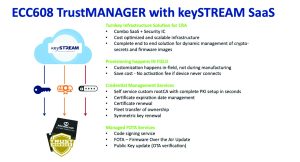 Figure 3- TrustMANAGER with Kudelski keySTREAM SaaS (source Microchip)
An ECC608-TMNGTLS is a variant of the ECC608 crypto authentication IC that comes pre-provisioned with cryptographic keys to connect to the keySTREAM SaaS. When deployed, the IoT device containing the ECC608-TMNGTLS will connect to the keySTREAM SaaS, giving ownership of the IoT device to the intended owner through in-field provisioning with its custom PKI. This provides an elegant, zero-touch approach without manually having to configure the key exchange. The cryptographic keys are capable of being remotely managed within the physical boundary of the secure authentication IC across its lifecycle.
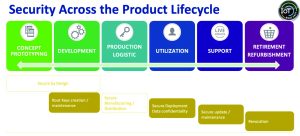 Figure 4 – Security across the product lifecycle (source Microchip)
The TrustMANAGER platform includes features for updating a device’s firmware over the air, securely signing code and the remote management of cryptographic keys. Implementing a remote device management capability alongside the security update requirements is increasingly high on the list for manufacturers, offering service agility and flexibility.
Regulation mandates increased attention to security
The IoT landscape is changing. An increased focus on cybersecurity regulations and more responsibility placed on device manufacturers is driving change. The European CRA, an example of one regional cybersecurity initiative, stipulates that manufacturers should maintain a device’s security functions for the first five years of the product’s lifetime. Although the CRA is initially aimed at consumer IoT devices, the European regulation is likely to be the tip of the iceberg, as more nation states follow the EU’s lead and start to publish and mandate their own cybersecurity strategy. It is highly likely that the CRA will also form the basis of cybersecurity standards in other market sectors and industries.
Cybersecurity regulation has a far-reaching impact. Not only does it add consumer confidence in a manufacturer’s product lineup, but it also strengthens a manufacturer’s market credibility, a factor vitally important for building commercial relationships, forming partnerships and demonstrating market leadership.
For electronics updates please visit: https://efemag.co.uk/category/news/