
When manufacturers must purchase electronic parts that are no longer available from authorised distributors, are obsolete, out-of-production, or only available from overseas sources, they can greatly benefit from collaborating with an independent distributor.
Over decades, independent distributors have developed a very sophisticated method of identifying and eliminating risk. To achieve this goal, industry-leading independent distributors, such as Classic Components, make substantial investments in managing global supply networks, evaluating and prioritizing suppliers, establishing preferred supplier relationships, implementing efficient Quality Management Systems (QMS), and procuring state-of-the-art inspection equipment.
 The process begins with vendor qualification and management to ensure the independent distributor is collaborating solely with a reliable and approved supplier. A tiered Supplier Selection and Approval System is used to assess vendors against rigorous standards. Each supplier is categorized, thoroughly documented, regularly reviewed, and subject to tier-reclassification based on events and patterns observed by Classic Components or reported by third-party sources.
These sources include instances of supplier non-conformance to product reliability and integrity, changes in quality status relative to industry standards, industry reports regarding overall vendor quality, alterations in financial conditions such as outstanding payments or accounting issues, shipping of substandard products, or repeated occurrences of product quality issues. In response to any of these factors, indefinite suspension may be imposed.
“Internally, our vendors are evaluated and assigned a grade and ranking using an alphanumeric system, which depends on their distributor type. This encompasses original chip manufacturers (OCMs), authorised distributors, along with other traders and alternative sources,” says Mike Thomas, president and global general manager at Classic Components, a premier independent distributor based in Torrance, CA.
 According to Thomas, when a manufacturer requests a part, an agent asks a series of questions and completes a flow-down risk profile form developed by the company. These questions determine the intended application of the chip, manufacturing date restrictions (day code), and material traceability requirements, which include proof of direct sourcing from the factory.
The systematic evaluation is conducted to identify any concerns linked to specific parts, commodities, brands, or vendors. The company’s supply chain and purchasing teams are some of the most experienced professionals in the industry and regularly undergo training to effectively utilize their system to detect potentially risky parts, identifying any discrepancies or other related issues.
“If there are any known issues associated with the part, a warning will be displayed,” says Thomas.
At this point, the independent distributor’s buyers will begin sourcing from vendors ranked by reputation and will negotiate the terms.
Compliance verification, which includes visual inspection, testing, and physical analysis of parts, serves as an additional layer of protection. Only parts that have undergone rigorous QA control, in accordance with internal controls and established international quality standards are shipped.
 As part of routine quality checkpoints, technicians conduct inspections of external packaging. During these inspections, they carefully examine the packaging for various elements, such as original and sealed packaging, correct labeling, proper QC markings, accurate lot codes, consistent colours and fonts, and potential bar code discrepancies.
During the inspection process, technicians carefully examine the internal packaging for various authenticating elements.
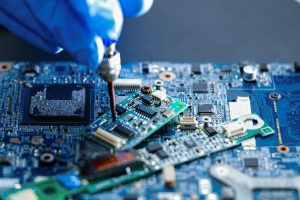
The chip is scrutinised as well. This includes inspection for physical arrangement in packaging, surface-mount packaging damage, pin orientation, coplanarity, surface scratches, cut or bent leads, lead blemishes, discoloration, rust, tarnish, evidence of remarking, lot codes and country of origin, as well as evidence of sandblasting or blacktopping.
 “To ensure the legitimacy and high quality of chips, the authentication process is considerably more comprehensive for items with higher risk profiles,” says Thomas.
When manufacturers have an urgent need for quality chips but cannot easily acquire them or risk substandard electronic components, working with an experienced independent distributor that will fully mitigate the risk is a safe, cost-effective option.